

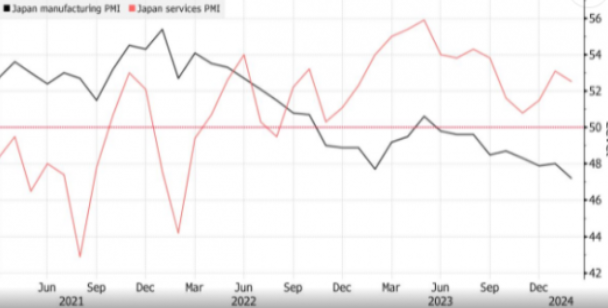
A key gauge of Japanese manufacturing activity fell to its lowest level in more than three years, a sign that business conditions are deteriorating as the economy struggles to emerge from recession. This also sent a warning signal to the Bank of Japan, which is considering exiting its ultra-loose policy.
S&P Global reported on Thursday that Japan’s preliminary Jibun manufacturing PMI fell to 47.2 in February, the lowest level since August 2020 and the ninth consecutive month that the indicator has been below the boom-bust line of 50.
S&P Global said a sharp drop in new orders led to a sharp slowdown in production activity.
“Japan’s private sector economy improved slightly at the start of the year but all but disappeared in February as business activity broadly stalled,” said Usamah Bhatti at S&P Global.
He added: “Business optimism is also the lowest since January 2023, reflecting less optimism about future output.”
Among sub-indexes, manufacturing production shrank at the fastest pace in a year as new orders plunged, the survey showed. Additionally, employment fell at the fastest pace since January 2021 as purchasing activity fell and capacity constraints eased.
Japan’s Jibun services PMI also fell to 52.5 in February from 53.1 in January, but has been in an expansion range above 50 since September 2022. The new business sub-index showed that the growth rate of new business was the highest since August last year. The composite PMI fell to 50.3 in February from 51.5 in January.
The latest signs of weakness in the manufacturing sector come after Japan’s economy unexpectedly slipped into recession at the end of 2023 due to weak domestic demand and an unstable outlook for external demand. In the fourth quarter of last year, Japan’s economy unexpectedly fell into recession, and its title of the world’s third largest economy was taken away by Germany.
In addition, the Tankan report (also known as the quarterly economic sentiment survey report) released on Wednesday also showed that Japan’s manufacturing confidence dropped sharply in February, with the number of pessimistic companies exceeding those that were optimistic for the first time in 10 months, which intensified people’s concerns. Worries about further economic downturn.
The Bank of Japan is watching every economic indicator closely for signs that a virtuous cycle linking rising wages to rising prices is taking hold. The company is negotiating with union representatives over wage increases for the next fiscal year.