

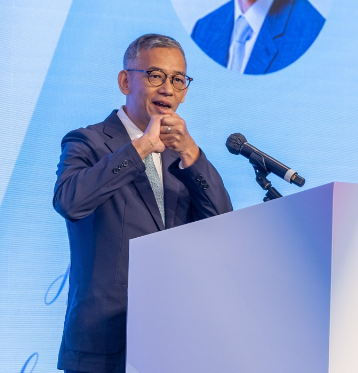
The 8th International Conference of the Hong Kong ICAC opened in Hong Kong on the 22nd. More than 500 representatives from nearly 60 jurisdictions and about 180 anti-corruption and law enforcement agencies will discuss current challenges and countermeasures in the field of anti-corruption, international cooperation, public-private cooperation, and the cultivation of youth integrity forces under the theme of “New Path to a Clean World” during the three-day meeting.
This conference is also the 11th Annual Meeting of the International Association of Anti-Corruption Agencies. The Federation was established in 2006 and is committed to promoting the implementation of the United Nations Convention against Corruption and promoting international anti-corruption cooperation. More than 170 institutions around the world have joined. Hong Kong ICAC Commissioner Wu Yingming will take over as Chairman of the Federation from September 2023.
In his speech at the opening ceremony, Hong Kong Chief Executive John Lee said that under the “One Country, Two Systems” principle, Hong Kong maintains a sound regulatory mechanism in line with international standards, and is renowned worldwide for its clean and efficient government, fair business environment, sound rule of law, judicial independence and zero tolerance for corruption, and is always at the forefront of the international fight against corruption.
In 2023, Hong Kong ranked 9th in the World Justice Project’s ranking of integrity and 14th in the Transparency International’s Corruption Perception Index. John Lee said that the SAR government will continue to play a pioneering and exemplary role in anti-corruption and support the ICAC in expanding its international cooperation network.
In his speech, Hu Yingming introduced that within the framework of the United Nations Convention against Corruption and in accordance with the requirements of building an honest Silk Road under the Belt and Road Initiative, the ICAC continues to carry out extensive anti-corruption cooperation, covering areas such as law enforcement, prevention, information sharing and technical support. This year marks the 50th anniversary of the establishment of the ICAC. The Hong Kong International Integrity Academy, established in February, has provided 17 professional courses to more than 40 anti-corruption agencies around the world. It is hoped that this conference will provide another platform for deepening international anti-corruption cooperation.
How can we better carry out anti-corruption actions under the current world situation? Guests from home and abroad discussed this issue at the meeting. Chief Justice of the Court of Final Appeal of the Hong Kong Special Administrative Region, Mr. Andrew Cheung, pointed out that the public’s zero-tolerance attitude towards corruption reflects the solid rule of law in a society. At present, corruption is more secretive, which brings difficulties to the fight against corruption. It is necessary to promote anti-corruption values throughout society, enhance public awareness of corruption, and carry out social education on the harm of corruption.
Ghada Fathi Wali, Director-General of the United Nations Office in Vienna and Executive Director of the United Nations Office on Drugs and Crime, believes that in order to promote anti-corruption actions, we must focus on the use of new technologies such as big data, promote the development of international and regional anti-corruption cooperation frameworks, attract institutions of different natures to participate, and grasp the new characteristics of corruption through measurement, investigation and analysis.
Peter Clement, deputy chief prosecutor of the European Public Prosecutor’s Office, introduced the experience of the agency in conducting transnational anti-corruption operations through information sharing and other means since its establishment, and called for further enhancement of international anti-corruption cooperation.
At the opening ceremony, the Hong Kong Independent Commission Against Corruption signed a memorandum of understanding on cooperation with the United Nations Office on Drugs and Crime and anti-corruption agencies of Kazakhstan, Mauritius, Saudi Arabia and South Africa to strengthen international anti-corruption cooperation.