

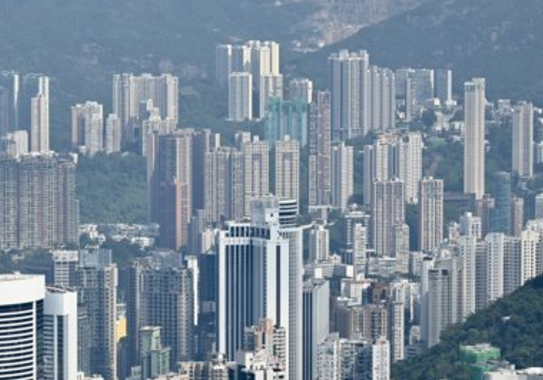
Hong Kong’s new and second-hand residential sales have rebounded under policy promotion, but the growth momentum may be difficult to sustain due to the weak economic outlook and high interest rates.
Centaline data also showed that Hong Kong’s second-hand housing transaction prices rose 0.5% in the week of the release of the Policy Address.
However, Hong Kong real estate agents are skeptical about the sustainability of residential sales growth. Despite some improvements in the short term, high borrowing costs and sluggish economic sentiment have made more people wait and see about buying houses.
Cushman & Wakefield Hong Kong Research Director Deng Shuxian believes that the residential market is largely affected by interest rates and economic cycles, and coupled with banks’ cautious lending attitude, the policy has limited stimulating effect on the residential and non-residential investment markets in the short term.
Hong Kong’s housing prices are hovering at an eight-year low. In his policy address, Li Jiachao announced the relaxation of mortgage loan conditions for residential properties, allowing home buyers to pay a lower down payment and raising the loan ratio for all residential properties to 70%.
Hong Kong’s new and second-hand residential sales have rebounded under policy, but the growth momentum may be difficult to sustain due to the weak economic outlook and high interest rates.
However, Hong Kong real estate agents are skeptical about the sustainability of residential sales growth. Despite some improvement in the short term, high borrowing costs and sluggish economic sentiment have kept more people on the sidelines about buying homes.
Data from Midland Realty showed that within seven days after Hong Kong Chief Executive John Lee delivered his third policy address on October 15, new building transactions increased by 20% year-on-year.
Data from Centaline Property also showed that Hong Kong’s second-hand housing transaction prices rose 0.5% in the week when the policy address was released.
In the luxury housing market, the Hong Kong government announced that residential transactions of no less than 50 million Hong Kong dollars (HKD, the same below, 8.52 million Singapore dollars) can be counted as new capital investor entry plans, and the rich can invest at least 30 million yuan to obtain residency.
Earlier, in conjunction with the Federal Reserve’s September rate cut, the Hong Kong Monetary Authority announced a 0.5 percentage point cut in the base interest rate. After the rate cut, Hong Kong’s one-month interbank offered rate remained at a high level of around 4.2%, and almost all new home loans were linked to floating rates.