

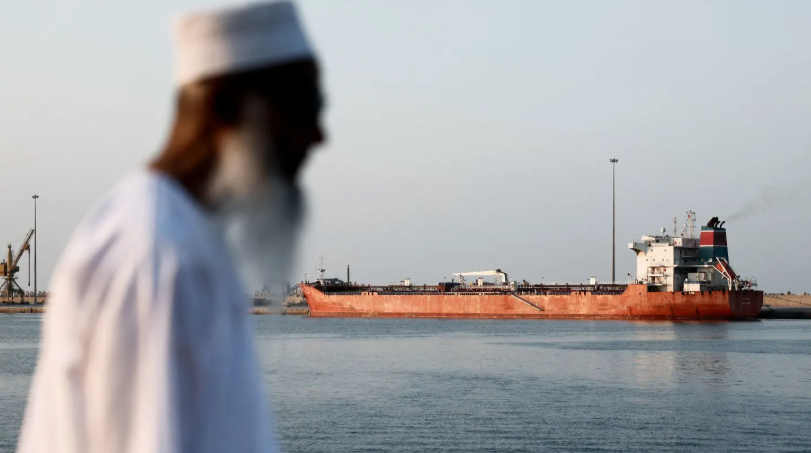
Brent crude oil closed above $100 on Friday for the second consecutive session, as the Iran war heads toward its third week with oil tanker traffic through the Strait of Hormuz still effectively at a standstill.
Brent futures rose 2.67%, or $2.68, to close at $103.14 per barrel. U.S. crude oil gained 3.11%, or $2.98, to settle at $98.71 per barrel.
Prices are rising despite the U.S. and its allies rolling out a number of measures to keep a lid on energy costs. The International Energy Agency has agreed to release of 400 million stockpiled barrels, the largest such action in history.
The U.S. has issued a 30-day waiver for India to purchase sanctioned oil from Russia. President Donald Trump is considering loosening rules under the Jones Act that require U.S. ships to transport goods between domestic ports, including oil and gas, in an effort to lower costs.
Traders are continuing to monitor developments in the Middle East. Overnight, Trump hinted that an end to the conflict was not imminent.
“We have unparalleled firepower, unlimited ammunition, and plenty of time,” he said, before calling on his followers to “watch what happens” to the Iranian regime on Friday.
Oil prices have notched another week of gains, with Brent futures up about 10%. It follows the 27.9% rise seen last week, which marked the biggest weekly gain in oil prices since the Covid-19 pandemic in 2020. WTI futures, which saw their best week since 1983 last week, ended the week more than 8% higher.
On Friday morning, reported that Trump had claimed on a call with G7 leaders earlier this week that Iran was “about to surrender.” A day later, Iran’s new supreme leader, Mojtaba Khamenei, vowed to keep fighting in a message delivered via state television.
A number of foreign ships in or near the Strait, a critical oil shipping route that has seen a blockade amid the escalating conflict, have been attacked this week. The strikes fed into concerns that a prolonged war could translate to a global economic shock.
“Get ready for oil to be $200 a barrel, because the oil price depends on regional security, which you have destabilised,” Ebrahim Zolfaqari, spokesperson for Iran’s military command, said on Wednesday.
In a note on Friday morning, Barclays’ Emmanuel Cau said investors were becoming increasingly jittery after initially pricing in a short-lived conflict.
“Investors still believe in the Trump put, hence global equities are not down as much as in past oil shocks,” they said. “But nervousness is growing by the day and the longer the Strait of Hormuz stays closed the more stagflationary markets will turn. Watch central banks next week amid hawkish repricing in rates.”